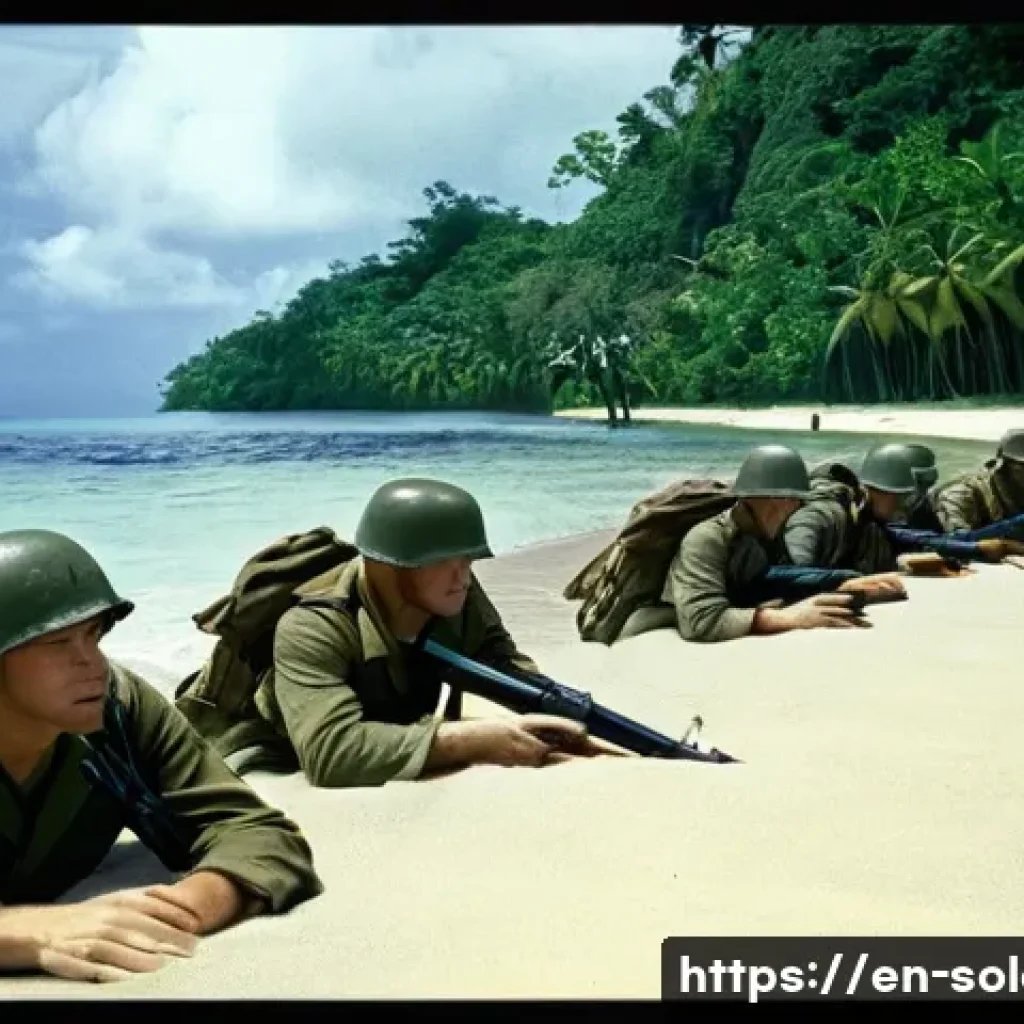
Ever wondered what it truly felt like to be on the front lines of a battle that changed the tide of history? Deep within the lush, yet unforgiving jungles of the Solomon Islands, a place of serene beauty today, lies the intense story of the Battle for Henderson Field.
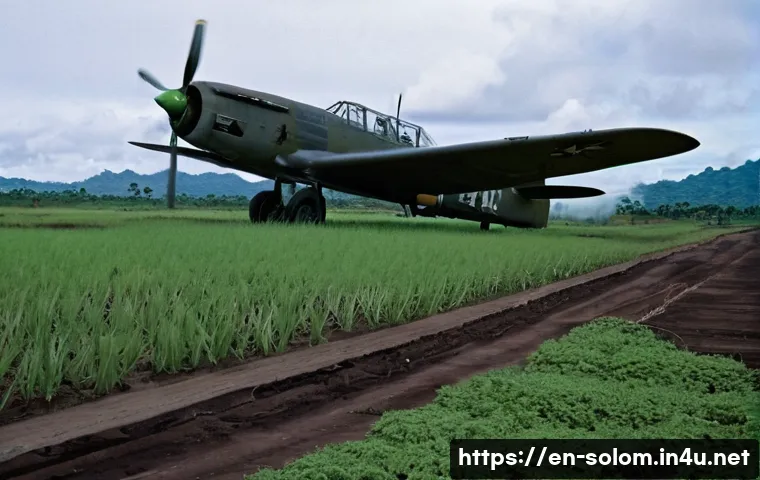
This wasn’t just any skirmish; it was a desperate, brutal struggle for a single airstrip on Guadalcanal, a fight that pushed brave men to their absolute limits and decided the fate of the Pacific.
I’ve always been captivated by the raw courage and sheer resilience displayed in such pivotal moments, where every inch of ground was contested, and the stakes couldn’t have been higher.
You can almost feel the sweltering heat, hear the relentless bombardments, and imagine the determination etched onto every face. It’s a powerful narrative of human spirit against overwhelming odds.
Join me as we uncover the incredible story behind this legendary clash and its lasting impact on the world.
The Crucible of Guadalcanal: Setting the Stage
I’ve always been fascinated by how seemingly small pieces of land can become the epicenters of world-changing events, and Guadalcanal is a prime example.
Picture this: a remote, malaria-ridden island in the vast Pacific, largely unknown to the Western world until 1942. But suddenly, it became the hottest piece of real estate on Earth.
The Japanese, with their eyes on disrupting Allied supply lines to Australia, began constructing an airfield here. When American intelligence caught wind of this, it was clear: this airfield, if completed, would be a major threat.
It was a race against time, a strategic chess match played out in the unforgiving jungle. The stakes weren’t just about an airstrip; they were about control of the Pacific, the very lifeline of a global conflict.
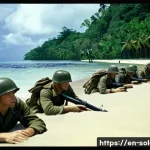
I often wonder what it must have felt like for those early Marines, landing on an unknown shore, knowing they were walking into a hornet’s nest, with no idea of the sheer brutality that awaited them.
The anticipation, the fear mixed with determination – it must have been palpable. This initial landing and the subsequent capture of the partially built Japanese airfield, quickly renamed Henderson Field after a fallen Marine aviator, set the stage for one of the war’s most brutal and prolonged campaigns.
The Strategic Imperative
The decision to seize Guadalcanal and its nascent airfield wasn’t made lightly. The Allied command understood that allowing Japan to establish a strong air base there would jeopardize vital shipping routes and potentially pave the way for further Japanese expansion towards Australia and New Zealand.
It was a pre-emptive strike, a bold move to wrest the initiative from the Japanese. I can only imagine the strategic planning sessions, poring over maps, trying to anticipate every possible contingency in a territory completely alien to them.
The sheer audacity of the plan speaks volumes about the desperation and determination on the Allied side.
Early Landings and Fierce Resistance
The initial landings in August 1942 were met with surprisingly light resistance, allowing the Marines to quickly secure the airfield. This early success, however, was deceptive.
It merely delayed the inevitable, as the Japanese were far from ready to concede defeat. They viewed Guadalcanal as a matter of immense national pride and strategic importance, and they would pour immense resources into recapturing it.
The stage was set for a prolonged, brutal struggle where every inch of ground would be contested with unimaginable ferocity. From my perspective, looking back, it’s clear this initial phase was just the calm before the storm, a brief respite before hell truly broke loose.
Airstrip Dreams and Deadly Realities: The Prize They Fought For
Henderson Field wasn’t just a strip of land; it was hope, a lifeline, and a symbol. It was the crucial prize, the entire reason for the unimaginable sacrifices made on Guadalcanal.
Imagine being a pilot, knowing that your only chance to refuel, rearm, or get medical attention was this single, often makeshift, dirt strip constantly under enemy fire.
For the ground troops, seeing those planes take off and land, knowing they were providing vital air support or bringing in desperately needed supplies, must have been a tremendous boost to morale amidst the constant jungle grind.
But for the Japanese, it was an unbearable thorn in their side, a constant reminder of their strategic loss. Their relentless efforts to recapture it underscore its unparalleled importance.
They launched wave after wave of desperate attacks, each one more costly than the last, all aimed at seizing this one patch of earth. The story of Henderson Field isn’t just about fighting on the ground; it’s about the relentless psychological battle, the constant threat of aerial bombardment, and the sheer grit required to keep that airstrip operational under the most harrowing conditions imaginable.
The ingenuity and sheer hard work involved in maintaining the field, often with limited equipment and under constant threat, is truly a testament to the human spirit.
The Cactus Air Force: Guardians of the Field
The small, ragtag collection of Marine, Army, and Navy planes operating from Henderson Field became famously known as the “Cactus Air Force.” They faced incredible odds: outnumbered, often flying outdated aircraft, and operating from a primitive, constantly shelled airfield.
Yet, their courage and determination were boundless. I often think about those pilots, taking off into skies dominated by the enemy, knowing the odds were stacked against them.
Their missions were not just about shooting down enemy planes; they were about protecting the troops on the ground, interdicting Japanese supply convoys, and providing invaluable reconnaissance.
They truly were the guardians of Henderson Field, holding the line in the air while their comrades fought tooth and nail below.
The Logistics Nightmare and Constant Threat
Keeping Henderson Field operational was an almost insurmountable logistical challenge. Supplies were scarce, repair parts were often non-existent, and the constant threat of Japanese air raids and naval bombardments meant that work never truly stopped.
Engineers and ground crews worked tirelessly, often under fire, to repair bomb craters, maintain aircraft, and ensure that the field remained functional.
It was a truly Herculean effort. From my vantage point, it’s a stark reminder that battles are not just won by soldiers on the front line, but by the countless individuals behind the scenes who keep the gears turning, often in anonymity.
Facing the Fury: Marine Grit Against Overwhelming Odds
When you read accounts of the Marines at Henderson Field, words like “grit” and “resilience” almost feel insufficient. They faced a relentless enemy, often outnumbering them, in a terrifying environment.
The Japanese, with their fanatical determination and preference for banzai charges, were a formidable foe. I’ve often tried to put myself in their boots, standing guard in the suffocating jungle heat, knowing that at any moment, a screaming wave of attackers could erupt from the darkness.
The battles weren’t just about firepower; they were about sheer willpower, about refusing to break even when every fiber of your being screamed for relief.
The memory of the Matanikau River, Edson’s Ridge, and the numerous other skirmishes around the perimeter of the airfield still sends shivers down my spine.
These weren’t clean, tactical maneuvers; they were brutal, hand-to-hand slugfests where survival often came down to raw courage and the bond with the man next to you.
The Marines held their ground, against incredible odds, demonstrating a level of courage that continues to inspire awe decades later. They truly embodied the spirit of “never give up.”
The Nighttime Terror of Edson’s Ridge
The Battle of Edson’s Ridge, often called “Bloody Ridge,” is a perfect example of the sheer desperation and ferocity of the fighting around Henderson Field.
For two harrowing nights, Colonel Merritt Edson’s Raiders and other Marine units withstood wave after wave of Japanese attacks, often resorting to hand-to-hand combat.
I can only imagine the terror and exhaustion of fighting through the night, barely able to see your enemy, relying on instinct and courage. The ridge became a symbol of Marine resolve, holding the line against an enemy determined to break through and seize the airfield.
It was a pivotal moment, and their stand ensured Henderson Field remained in Allied hands.
The Constant Threat of Land and Sea
The Japanese weren’t just attacking from the jungle; they were also bombarding the airfield and Marine positions from the sea with naval gunfire, often nicknamed “Tokyo Express” due to their regular nighttime incursions.
This multi-front assault meant that there was rarely a moment of peace. The Marines were constantly on alert, dealing with snipers, ambushes, and large-scale frontal assaults.
It truly was a 24/7 battle for survival, pushing human endurance to its absolute limits.
Jungle Warfare: A Hell Unlike Any Other
If you’ve ever experienced oppressive heat and humidity, multiply that by a thousand and add the constant threat of death, and you might begin to grasp the conditions on Guadalcanal.
The jungle itself was an enemy as formidable as the Japanese. I’ve always been fascinated by how different environments shape warfare, and the Solomon Islands presented a unique kind of hell.
Imagine dense, impenetrable foliage, torrential rains turning paths into mud pits, and a pervasive sense of isolation. Disease was rampant – malaria, dysentery, and fungal infections plagued both sides, often incapacitating more soldiers than enemy fire.
It wasn’t just about fighting men; it was about fighting the elements, the insects, and the sheer psychological toll of living in such an unforgiving environment.
The jungle obscured vision, amplified sounds, and made every movement a struggle. It was a place where paranoia could easily take root, where every rustle in the leaves could signify an enemy ambush.
This brutal environment truly tested the limits of human endurance, adding another layer of unimaginable difficulty to an already desperate situation.
The Invisible Enemy: Disease and Environment
While bullets and bombs were deadly, the invisible enemies of disease and the environment took a staggering toll. Malaria was endemic, debilitating troops on both sides and significantly impacting combat effectiveness.
Dysentery, dengue fever, and various skin infections ran rampant due to poor sanitation and constant exposure to the elements. I’ve heard stories of men so weakened by illness that they could barely stand, yet still had to fight.
This constant battle against sickness added immense psychological strain, making an already desperate situation even more harrowing.
Logistical Nightmares and Environmental Challenges
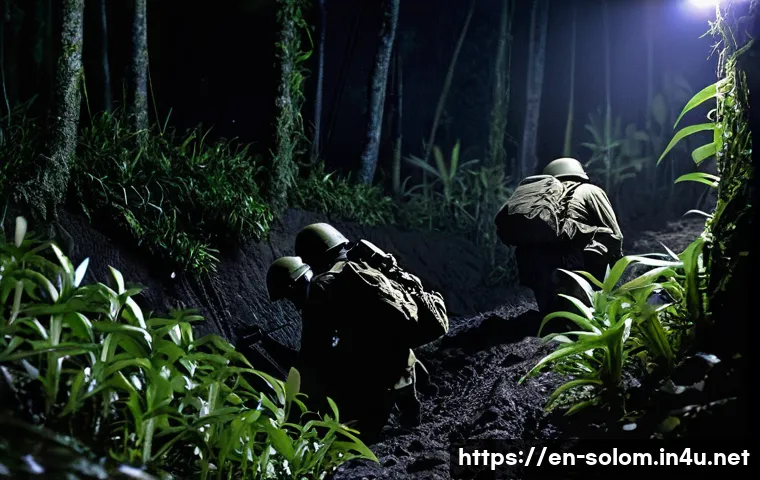
Supplying troops and moving equipment through the dense, trackless jungle was a logistical nightmare. Roads were non-existent or quickly became impassable mud slicks.
Everything had to be carried, often on men’s backs, through incredibly difficult terrain. The relentless humidity also wreaked havoc on equipment, leading to corrosion and malfunctions.
It’s a stark reminder that in warfare, the environment can be as challenging an adversary as any opposing army, demanding incredible adaptability and resilience from those who fight within it.
Turning the Tide: Key Moments of Decision
The Battle for Henderson Field wasn’t a single, monolithic event, but rather a series of desperate clashes that collectively turned the tide in the Pacific.
Each major engagement, from Edson’s Ridge to the final Japanese retreat, represented a critical juncture where the fate of the battlefield, and indeed the entire campaign, hung in the balance.
I often reflect on how such small decisions, acts of individual bravery, or tactical missteps can have monumental consequences in the grand scheme of things.
The sheer tenacity displayed by the American forces, coupled with a series of strategic blunders by the Japanese, ultimately shifted the momentum. It wasn’t a sudden, dramatic victory, but rather a slow, grinding process of attrition, a test of wills where the Allies ultimately proved more resilient.
The cumulative effect of these key moments, each a desperate struggle for survival and control, eventually tipped the scales in favor of the Allied forces, marking a crucial turning point in the Pacific War.
| Key Engagement | Date | Significance |
|---|---|---|
| Battle of the Tenaru/Ilu River | August 21, 1942 | First major Japanese ground assault; American victory confirmed the importance of perimeter defense. |
| Battle of Edson’s Ridge | September 12-14, 1942 | Fierce Japanese attempt to capture Henderson Field, repelled by Marine Raiders; a critical defensive victory. |
| Battle for Henderson Field (Main Offensive) | October 23-26, 1942 | Massive, multi-pronged Japanese ground offensive to seize the airfield; ultimately repelled with heavy losses for Japan. |
| Naval Battle of Guadalcanal | November 12-15, 1942 | Decisive naval engagement that ended Japanese attempts to resupply and reinforce their ground forces significantly. |
The Naval Battles: A Crucial Underpinning
While the focus is often on the ground fighting, the naval battles around Guadalcanal were absolutely critical. These weren’t just skirmishes; they were massive fleet engagements fought with incredible ferocity, often at night, in what became known as “Ironbottom Sound.” The struggle to control the seas around the island was a fight for supply lines – whoever controlled the sea controlled the ability to resupply and reinforce their troops.
I can’t imagine the terror of a naval engagement in the darkness, the roar of massive guns, the explosions lighting up the night sky. The victory in these naval battles ultimately choked off Japanese attempts to effectively reinforce their beleaguered ground forces, proving just as vital as any victory on land.
The Final Push and Japanese Withdrawal
By late 1942 and early 1943, the tide had unequivocally turned. The unrelenting pressure from Allied ground forces, combined with the successful interdiction of Japanese supply convoys by the Cactus Air Force and Allied naval power, made the Japanese position on Guadalcanal untenable.
Their last major offensive, the October Battle for Henderson Field, ended in catastrophic failure. The Japanese command finally acknowledged the futility of their efforts and began the arduous process of withdrawing their remaining forces.
It wasn’t a clean retreat; it was a desperate evacuation under constant harassment. The long, brutal campaign was finally drawing to a close, marking the first major strategic land victory for the Allies in the Pacific.
Echoes of Courage: The Human Stories Behind the Headlines
Beyond the strategic maps and casualty figures, the Battle for Henderson Field is a tapestry woven with countless individual stories of courage, sacrifice, and unimaginable hardship.
When I read personal accounts, it’s these human moments that truly resonate. It’s the story of a medic risking his life under fire to save a wounded comrade, or a machine gunner holding his position against overwhelming odds until his ammunition ran out.
These weren’t superheroes; they were ordinary men thrust into extraordinary circumstances, facing horrors that most of us can barely comprehend. Their letters home, often censored and carefully worded to avoid alarming loved ones, offer a glimpse into the grim reality, yet also convey a sense of duty, camaraderie, and an unyielding will to survive.
It’s a powerful reminder that behind every statistic and strategic maneuver, there were real people, with families and dreams, fighting for something bigger than themselves.
Their sacrifices echo through history, reminding us of the immense human cost of war and the incredible resilience of the human spirit.
Individual Acts of Heroism and Sacrifice
The history of Henderson Field is replete with stories of individual heroism. From Medal of Honor recipients like John Basilone, who single-handedly held off a Japanese assault with a machine gun, to countless unnamed privates who performed acts of incredible bravery, the courage displayed was extraordinary.
I often find myself wondering what it takes for a person to push past the instinct for self-preservation and perform such selfless acts. It speaks volumes about the bonds formed under fire and the profound sense of duty they felt towards their comrades and their country.
These stories aren’t just historical footnotes; they are enduring testaments to the strength of the human spirit in the face of absolute terror.
The Unseen Scars: Beyond the Battlefield
The battle didn’t end when the fighting stopped. For those who survived, the mental and physical scars often lasted a lifetime. Many carried the visible wounds of shrapnel and bullets, but countless others bore the invisible burden of trauma, the memories of jungle horrors, and the loss of friends.
I’ve always felt it’s crucial to remember that the cost of war extends far beyond the battlefield. These men returned home changed, having witnessed and endured things that most of us will never have to face.
Their stories, often told years later, if at all, are a poignant reminder of the true human cost of conflict and the sacrifices made for freedom.
Lessons Etched in Time: What Henderson Field Taught Us
The Battle for Henderson Field wasn’t just a military victory; it was a profound learning experience that reshaped Allied strategy in the Pacific. I believe history offers us invaluable lessons, and Guadalcanal is a masterclass in adapting to new forms of warfare.
It forced military planners to confront the brutal realities of jungle combat, the immense logistical challenges of fighting in remote island chains, and the critical importance of combined arms operations—air, land, and sea working in concert.
The campaign highlighted the necessity of air superiority, demonstrating how control of the skies could directly impact outcomes on the ground and at sea.
It also underscored the sheer determination of the Japanese soldier and the need for new tactics to overcome their fierce resistance. For me, looking back, it’s clear that the hard-won lessons from Henderson Field directly influenced subsequent island-hopping campaigns, saving countless lives and ultimately accelerating the Allied victory in the Pacific.
It was a crucible that forged new strategies and leaders, profoundly shaping the course of the war.
Adapting to a New Kind of Warfare
Guadalcanal introduced the Allies to a type of warfare vastly different from what they had anticipated or trained for. The dense jungle, extreme climate, and the fanatical resistance of the Japanese required a rapid and painful adaptation of tactics, training, and equipment.
From developing new jungle fighting techniques to understanding the psychological toll of such an environment, every lesson was paid for in blood. This forced evolution in combat doctrine was crucial for future operations in the Pacific.
The Indispensable Role of Air Power
One of the most enduring lessons from Henderson Field was the absolute indispensability of air power. The Cactus Air Force, despite its humble beginnings and constant struggles, proved that control of the skies over the battlefield was paramount.
It enabled reconnaissance, provided vital close air support for ground troops, and crippled enemy supply lines. The battle solidified the understanding that modern warfare, especially in geographically challenging theaters, could not be won without overwhelming air superiority.
Wrapping Things Up
As we close the chapter on the Crucible of Guadalcanal, I find myself deeply moved by the stories of resilience and sacrifice. It’s a powerful reminder that history isn’t just a series of dates and battles; it’s the sum of countless human experiences, each filled with courage, fear, and an unwavering will to endure. Reflecting on the sheer grit displayed by those on all sides, it truly puts into perspective the incredible strength of the human spirit when faced with the unimaginable. We often talk about turning points, and Guadalcanal was undeniably one, but its true legacy lies in the profound lessons it etched into the annals of military strategy and human endurance. It teaches us about the costs of conflict, yes, but also about the profound courage that can emerge from the darkest times, something I believe we can all carry forward in our own lives.
Good to Know Insights You Might Love
1. The “Tokyo Express” wasn’t a train, but a terrifying reality for the Allies. This was the nickname given to the Japanese naval forces, primarily destroyers, that made nightly runs to Guadalcanal to deliver supplies and troops, and often to bombard American positions. These daring nighttime missions were incredibly dangerous but absolutely vital for the Japanese in their attempts to reinforce their beleaguered forces. The U.S. Navy spent months trying to intercept and stop these runs, leading to some of the most brutal naval battles of the Pacific, often fought in pitch darkness. It paints a picture of constant vigilance and fear on both sides, with the darkness of the Pacific offering little respite. Imagine being a Marine on shore, hearing the ominous thrum of approaching ships and knowing what was coming next. That constant threat from the sea added another layer of unimaginable stress to an already hellish environment, truly defining the desperate nature of the campaign and its impact on everyone involved.
2. “Ironbottom Sound” got its name for a very grim reason. The waters around Guadalcanal became the final resting place for dozens of warships and transport vessels from both the Allied and Japanese forces. Due to the intense and frequent naval battles, particularly at night, so many ships were sunk that the seabed was literally littered with their wreckage. Divers today still explore these incredible underwater graveyards, a stark and silent memorial to the fierce struggle that took place there. It’s a haunting testament to the ferocity of the naval combat, and a powerful visual of the sheer amount of firepower unleashed in this small stretch of ocean. Visiting these sites, or even just seeing photos, makes you truly grasp the scale of the destruction and the lives lost in those desperate engagements. It’s a sobering reminder of the material and human cost of achieving dominance in the Pacific theater, a place where the ocean itself became a silent witness to history.
3. The environmental toll was as deadly as the enemy. We often focus on bullets and bombs, but on Guadalcanal, disease and the unforgiving jungle proved to be incredibly lethal adversaries. Malaria, dysentery, dengue fever, and various tropical infections ravaged both sides, often incapacitating more men than direct combat. The suffocating humidity, torrential rains, and dense, insect-infested jungle created an utterly miserable and deadly environment. It was a constant fight against the elements, requiring incredible resilience just to survive daily life, let alone engage in combat. I’ve read accounts that describe how simply existing in that climate was an energy-draining battle, where clean water was a luxury and even a small cut could lead to a life-threatening infection. It highlights a brutal aspect of warfare that often gets overshadowed by the heroics of battle, but was a relentless, silent killer on Guadalcanal.
4. Henderson Field was nicknamed “Cactus” due to its operating units. The patchwork air force, comprised of Marine, Army, and Navy planes, was a motley crew but incredibly effective. The name “Cactus Air Force” originated from the code name for Guadalcanal itself during the initial stages of the campaign. These pilots and their ground crews operated under unimaginable pressure, often outnumbered and flying older aircraft from a constantly shelled and barely functional airfield. Their courage in the face of overwhelming odds was legendary, and their relentless efforts to protect the ground troops, interdict Japanese supply convoys, and maintain air superiority were absolutely critical to the Allied victory. It goes to show that even with limited resources, sheer determination and tactical ingenuity can turn the tide. Their story isn’t just about aerial combat; it’s about dedication and adaptability in the most trying circumstances, embodying the spirit of making the absolute most of what you have, a lesson applicable far beyond the battlefield.
5. The strategic implications extended far beyond the island. Guadalcanal wasn’t just a battle for a single airstrip; it was a pivotal moment that effectively halted Japanese expansion in the South Pacific and marked the first major Allied strategic land victory against Japan. Before Guadalcanal, the Japanese seemed unstoppable. After it, the initiative firmly shifted to the Allies, paving the way for the island-hopping campaign that would eventually lead to victory. It was a brutal, drawn-out slugfest, but the ultimate Allied triumph demonstrated that the Japanese war machine was not invincible and that their aggressive expansion could be checked. This shift in momentum had profound psychological and strategic effects on both sides, profoundly influencing the remainder of the Pacific War. It’s a powerful testament to how a seemingly localized conflict can have ripple effects that determine the course of much larger global events, truly a turning point in every sense of the word, and a foundation for subsequent Allied successes.
Key Takeaways from the Crucible
What truly sticks with me from the Guadalcanal campaign is the sheer human cost and the incredible adaptability required to survive. It taught us that even in the most brutal environments, strategic air superiority and naval control are absolutely paramount. The battle also underscored the unparalleled resilience of the individual soldier and Marine, fighting not just an enemy, but the unforgiving jungle itself. It was a crucible that refined Allied tactics for future Pacific operations, demonstrating the critical importance of combined arms and relentless perseverance. Ultimately, Guadalcanal wasn’t just a victory; it was a hard-won lesson in the true nature of modern warfare, a testament to the fact that determination, even against overwhelming odds, can indeed turn the tide. It proved that the initiative could be seized and maintained, setting a new course for the Pacific War and showcasing the indomitable spirit of those who fought there.
Frequently Asked Questions (FAQ) 📖
Q: Why was Henderson Field so incredibly vital that both the Japanese and
A: llied forces fought so fiercely over it? A1: Ah, this is where the strategic genius, or perhaps the sheer desperation, of wartime comes into play! You see, Henderson Field wasn’t just some dusty airstrip; it was essentially an “unsinkable aircraft carrier” right in the heart of the Solomon Islands, and whoever controlled it, controlled the local skies.
The Japanese had started building it, intending to use it to threaten Allied supply lines to Australia and the eastern flank of New Guinea, really expanding their reach in the Pacific.
But then, the U.S. Marines landed and captured the partially completed field, quickly naming it after Marine aviator Major Lofton Henderson. For the Allies, having aircraft based at Henderson Field meant they could protect their own supply convoys, crucial for sustaining troops on Guadalcanal, and launch attacks against Japanese shipping and ground forces.
Imagine trying to resupply an island without air cover—it would have been a death trap! On the flip side, the Japanese desperately needed it back to continue their offensive strategy and avoid being cut off.
It was this geographic advantage, this potential to dominate air and sea around the southern Solomons, that made Henderson Field the absolute center of gravity for the entire Guadalcanal campaign.
Both sides knew that losing it would be a critical blow, making the fight for this one patch of land intensely personal and utterly unforgiving.
Q: What were the most harrowing challenges soldiers faced while fighting for Henderson Field and on Guadalcanal?
A: Oh, my heart aches just thinking about what those brave men endured. It wasn’t just the enemy in front of them; it was the entire environment conspiring against them.
First, the sheer brutality of the combat was relentless. We’re talking about constant ground assaults, day and night, coupled with intense naval bombardments and air raids that could turn the jungle into an inferno in moments.
Can you even imagine trying to hold a defensive line when battleships are hurling two-ton shells that literally sucked the air out of your lungs and collapsed your shelters?
Many men were buried alive by those blasts. Beyond the direct fighting, the unforgiving tropical jungle itself was a formidable foe. Sweltering heat, constant humidity, and torrential rains meant everything was perpetually wet, muddy, and prone to decay.
Then there were the diseases—malaria, dysentery, dengue fever, and all sorts of tropical infections ravaged both sides, often incapacitating more men than enemy bullets.
Supplies were often scarce, especially for the Marines early on, leading to malnutrition and a diet of often maggot-infested rice. It truly was an “Island of Death” as the Japanese called it, where every day was a struggle for survival against disease, starvation, and a determined enemy who fought with incredible ferocity.
It makes you wonder how anyone could keep going.
Q: What was the ultimate outcome of the Battle for Henderson Field, and what was its broader impact on the Pacific War?
A: The outcome of the Battle for Henderson Field, which raged from October 23rd to 26th, 1942, was a decisive American victory. Despite repeated, desperate, and incredibly costly Japanese ground offensives and intense naval and air attacks, the U.S.
Marines and Army troops, including the raw but determined 164th Infantry Regiment, managed to hold the perimeter around the airfield. The Japanese suffered tremendous casualties, with thousands of men lost in their failed attempts to retake the field.
This victory was a monumental turning point in the Pacific War. It shattered the myth of Japanese invincibility and, critically, shifted the strategic initiative to the Allies.
After this battle, the Japanese military never regained the strategic offensive. While the broader Guadalcanal campaign continued for a few more months, the Battle for Henderson Field meant the Japanese high command eventually realized they couldn’t retake the island, leading to their withdrawal in early 1943.
This success solidified the Allied “island-hopping” strategy and provided a crucial springboard for future offensives. It truly paved the way for the eventual Allied victory in the Pacific, proving that well-defended ground airfields, even in the harshest conditions, could dictate the course of an entire war.
It was a testament to courage, resilience, and the sheer will to hold that vital piece of dirt.